Paver Versus Concrete Patio – Which Is Better?
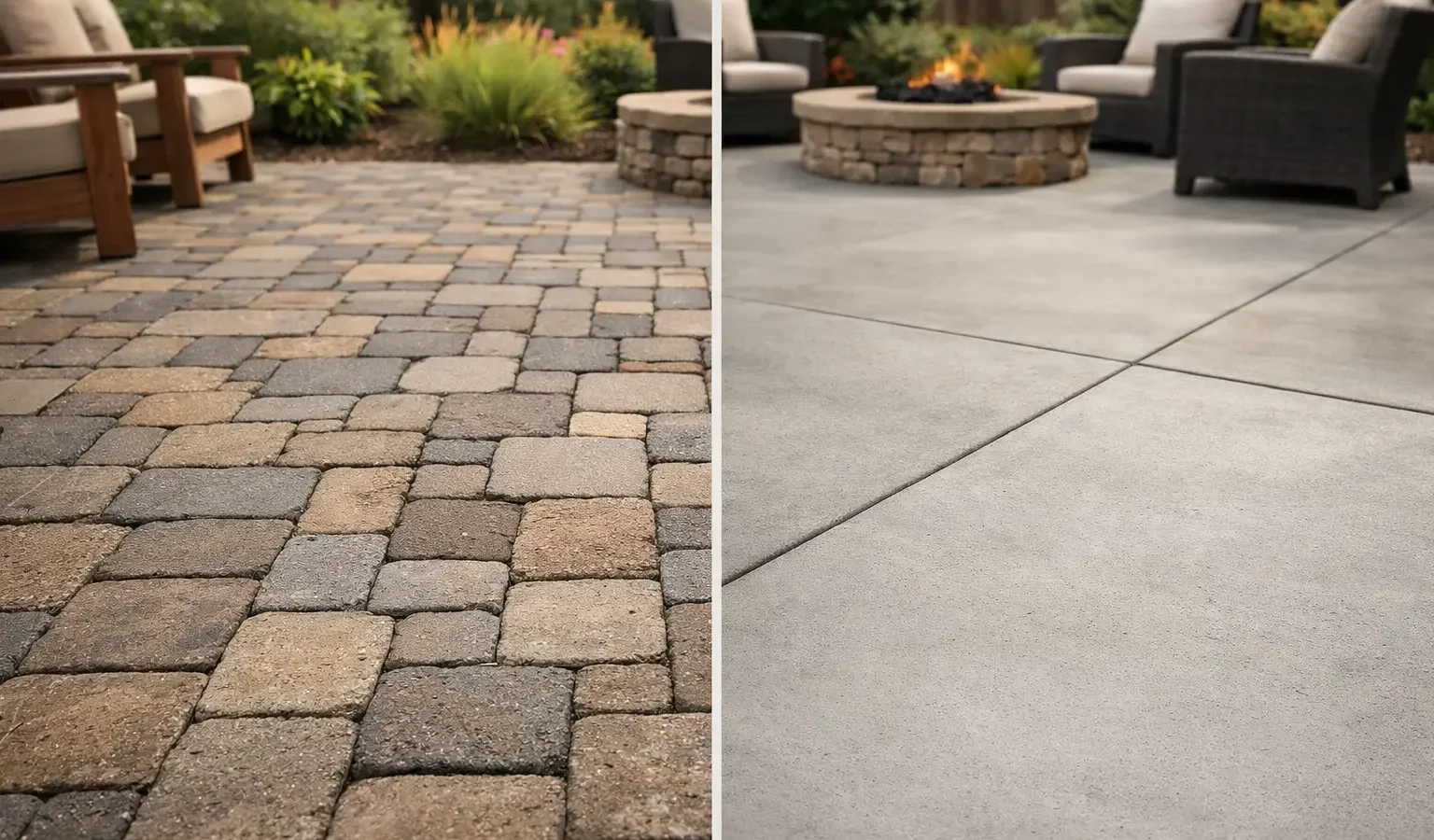
A patio has to do more than fill an empty section of yard. It may anchor a dining area, create a level surface beside a pool, connect to a new deck, or become the foundation for an outdoor kitchen and fire feature. The paver versus concrete patio decision affects how that space looks, drains, ages, and fits into the larger backyard you have in mind.
Neither material is automatically better. Pavers offer flexibility, pattern, and repairability. Concrete can create a clean, continuous surface at a lower initial cost in the right conditions. The better choice depends on your site, design goals, climate, budget, and how permanent or adaptable you want the finished space to be.
1. Start With the Patio’s Job
Before comparing materials, define what the patio needs to support. A small landing outside a back door has different demands than a 700-square-foot entertaining area with a grill station, dining table, lounge seating, and a pergola overhead.
A concrete patio often suits homeowners who want a broad, simple plane with minimal visual interruption. It works especially well for contemporary homes, utility-focused side yards, and projects where the patio is one component of a larger renovation. Stamped, broom-finished, exposed aggregate, and colored concrete can expand the design options, although each finish needs to be specified clearly before work begins.
Pavers are often the stronger fit when the patio is meant to feel like an intentional outdoor room. They come in a wide range of sizes, colors, textures, and laying patterns, from restrained large-format slabs to more traditional modular stone looks. Pavers can also make it easier to create defined zones, curved edges, pathways, and transitions to a pool deck, garden, or fire pit area.
The key question is not simply, “What looks better?” Ask how the surface will relate to the house, the grade of the yard, and the other features you may add later.
2. Compare Upfront Cost With Long-Term Value
For many homeowners, concrete begins with a cost advantage. A basic poured concrete patio generally requires less material and installation labor than a properly built paver patio. Decorative finishes, custom colors, complex forms, excavation, retaining work, and difficult access can narrow that gap quickly.
Pavers typically cost more because installation is more layered. The crew must excavate to the correct depth, prepare and compact the base, establish drainage, install edge restraints, place bedding material, lay the units, and compact the finished surface. Quality at every stage matters. A paver installation that skips base preparation may look good on day one and become uneven after a season of settlement or freeze-thaw movement.
Initial price is only one part of the decision. Concrete can crack over time, particularly where soils move, temperatures swing, or drainage is poor. Control joints help direct cracking, but they do not guarantee an unbroken surface. Repairing a visible crack can be difficult to blend, especially in decorative concrete.
Individual pavers can usually be lifted and reset if a small area settles or if underground utilities need access. That repairability can be valuable for a long-term backyard plan. It does not mean pavers are maintenance-free, but it can make future corrections more contained and less visually disruptive.
3. Consider Climate, Soil, and Drainage Early
The best material on paper can perform poorly if the patio is built without respect for site conditions. This is where a useful first conversation with an experienced patio contractor matters most.
In regions with freezing winters, both materials need a stable, well-drained base. Water trapped beneath a patio can contribute to heaving, settlement, and surface movement as temperatures change. Pavers have joints that allow small amounts of movement across the field, while concrete is a monolithic slab that relies on proper thickness, reinforcement where appropriate, joints, and subgrade preparation.
In hot, sunny climates, light-colored pavers or concrete may be more comfortable underfoot than dark surfaces. Around pools, homeowners should also consider traction, glare, and how the surface feels when wet. A textured concrete finish can improve slip resistance, while certain paver profiles are designed for wet outdoor settings.
Drainage deserves particular attention in either case. Water should move away from the home and toward an approved drainage path, not collect against a foundation or flow toward a neighbor’s property. A patio that appears level should still have deliberate slope. Where runoff is a concern, permeable pavers or integrated drains may be worth evaluating as part of the overall site plan.
4. Paver Versus Concrete Patio Maintenance
Concrete offers a relatively simple day-to-day maintenance profile. Sweep it, wash it periodically, and reseal it when recommended for the finish and local conditions. The trade-off is that stains, spalling, and cracks can be difficult to hide once they occur. Deicing products and harsh chemicals may also damage some concrete surfaces, particularly in colder markets.
Pavers need periodic attention to the joints. Sand can wash out over time, and weeds may emerge if organic material accumulates in the surface. Polymeric joint sand, edge restraints, routine cleaning, and occasional re-sanding can keep a paver patio stable and tidy. Some homeowners also choose to seal pavers for color enhancement and stain resistance, although sealing is not required for every product or aesthetic.
The practical difference comes down to how you prefer to manage aging. Concrete may develop a few permanent marks that become part of the surface. Pavers may require more occasional upkeep, but individual pieces can often be replaced when damage or staining is isolated. For a high-use cooking area where grease or dropped utensils are likely, having replaceable units can be reassuring.
5. Think About Design Flexibility Beyond This Year
A patio rarely stays alone forever. Homeowners often begin with a seating area, then add a shade structure, built-in grill, low retaining wall, lighting, or a fire feature once they see how the space is used.
Pavers make later modifications easier in many cases. If you need to add a gas line for a fire table, run electrical service to a pavilion, or adjust a drainage point, the affected section can potentially be removed and reinstalled. Matching older pavers years later is not always perfect, so it is wise to ask whether extra material can be retained after installation.
Concrete can also support an evolving backyard, but future changes may involve cutting and patching the slab. With careful planning, a contractor can place sleeves for future utilities, establish locations for footings, and design expansion joints around anticipated additions. If a pergola, outdoor kitchen, or screen room is already part of your longer-term vision, mention it before the patio is poured.
This is also the moment to consider visual continuity. A paver patio can echo the color of masonry on the house or existing walkways. Concrete can create a calm counterpoint to wood decking, natural stone, and planting beds. The goal is not to make every element match. It is to make the backyard feel planned rather than assembled in phases without a shared direction.
6. Choose the Right Builder Conversation
A strong patio estimate should account for more than square footage. The builder should understand access to the yard, demolition needs, excavation depth, soil conditions, drainage strategy, material selection, edge details, and how the patio will connect to the home. For a larger project, they should also understand whether the patio needs to coordinate with a deck, pool, retaining wall, or outdoor living structure.
Bring photos of the yard, inspiration images, a rough budget range, and an honest timeline to the first discussion. If you already know you want a fire feature or outdoor kitchen, say so even if that work will happen later. That context helps a qualified builder recommend a surface and construction approach that supports the complete project.
Deckari can help homeowners organize that project context before being introduced to outdoor living professionals suited to the scope. You remain in control of the contractor selection, design direction, estimates, and agreement.
A patio should make the rest of your property more usable, not create a maintenance or drainage problem you inherit later. Choose the material that fits the way you want to live outside, then give the builder enough project detail to build it well.