How to Find an Outdoor Fireplace Builder Near Me
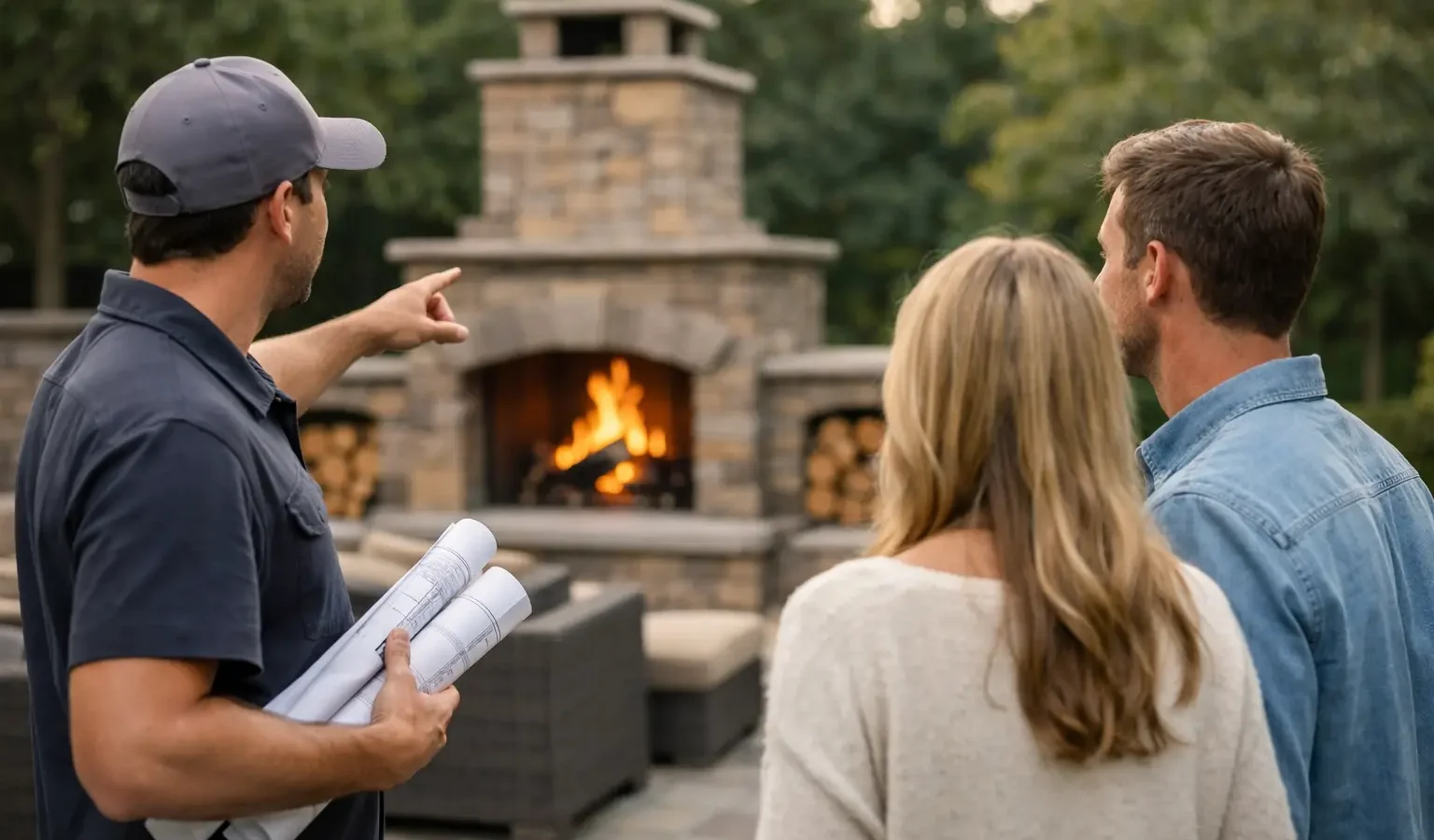
A fireplace can change the way a backyard gets used after sunset, through cooler months, and when guests gather. But searching for an outdoor fireplace builder near me can quickly produce a mixed list of masonry contractors, landscapers, general remodelers, and gas-fire specialists. The better question is not simply who is nearby. It is who has the experience, process, and trade coordination to build the fire feature your property actually requires.
An outdoor fireplace is a permanent construction project with visual, structural, fuel, drainage, and code considerations. A productive first conversation begins when you can describe how you want the space to work, what is already in place, and where you need professional guidance.
1. Start With the Role the Fireplace Will Play
Before contacting builders, decide whether the fireplace is the centerpiece of a larger outdoor living project or a stand-alone improvement. That distinction affects the contractor fit, budget, schedule, and design sequence.
A fireplace placed beside an existing patio may be relatively straightforward, provided the surface, access, utilities, and setbacks support the plan. A fireplace that anchors a new deck, covered porch, pavilion, outdoor kitchen, or full backyard renovation needs broader coordination. The builder may need to work alongside a deck contractor, electrician, gas professional, hardscape crew, or landscape designer.
Think beyond the fireplace itself. Will it face a dining area, a lounge area, a pool, or a view? Do you want a formal masonry hearth with a chimney, a clean-lined stucco surround, or a more compact gas feature built into a retaining wall? Is the goal warmth, ambiance, occasional cooking, or all three? These choices help separate a vague wish from a project a qualified builder can assess.
2. Look for Relevant Fire-Feature Experience
Not every excellent outdoor contractor builds fireplaces, and not every fireplace installer is equipped to handle an integrated backyard project. When evaluating an outdoor fireplace builder near you, ask for examples that resemble your intended scope and setting.
A builder with experience in outdoor fireplaces should be prepared to discuss the realities behind the finished image: foundation or footing requirements, noncombustible clearances, chimney height, prevailing wind, gas-line routing, electrical needs, drainage, and how the structure will meet local requirements. The exact answer depends on your municipality, property layout, fuel type, and design. A confident professional will not treat those details as afterthoughts.
For a wood-burning fireplace, chimney design, smoke management, firebox construction, and material selection carry particular weight. A gas fireplace can offer more predictable operation and simpler cleanup, but it may require gas capacity verification, a properly routed line, and service access for components. Neither choice is universally better. The right choice depends on how you plan to use the feature and what the site can support.
If your fireplace is being added near a deck or covered structure, ask directly how the builder approaches clearance, heat protection, and integration with combustible materials. A beautiful rendering is useful, but a buildable plan is what protects the investment.
3. Bring Useful Details to the First Conversation
You do not need finished plans before speaking with a builder. You do need enough information to make the conversation specific. A few photos of the yard, inspiration images, approximate dimensions, and a clear explanation of what you want to change can establish a useful starting point.
It also helps to share whether you own the property, your preferred construction window, and the budget range you are considering. A budget range is not a commitment. It gives a builder the context to recommend an appropriate path, whether that means simplifying finishes, phasing a larger project, or considering a different type of fire feature.
Be clear about site conditions as well. Mention slopes, retaining walls, mature trees, pool equipment, existing gas service, HOA rules, narrow side-yard access, and any known easements. These are not minor details. They can change labor needs, equipment access, engineering requirements, and the feasibility of a location.
For homeowners who are still comparing possibilities, it is reasonable to ask what level of design documentation a builder needs before estimating. Some firms can guide an early concept and then price a developed plan. Others work best from completed drawings. Knowing that distinction early prevents a stalled process later.
4. Compare Builders on Fit, Not Just a Starting Price
An early price range can be helpful, but it is only meaningful when the scope is comparable. One proposal may include demolition, footings, utility work, permits, chimney construction, finish materials, and site restoration. Another may price only the visible fireplace structure. A low initial number can become less useful when major project elements are left undefined.
Ask each prospective builder how they define the scope, what assumptions they are making, and what could affect final cost. The answer should be clear enough for you to understand where flexibility exists. Natural stone, custom hearths, taller chimneys, difficult access, and utility upgrades can all move the budget. So can integration with a new patio, roof structure, seating wall, or outdoor kitchen.
Communication fit matters, too. You want a builder who listens to your priorities, identifies missing information without making the process feel overwhelming, and explains next steps plainly. The right professional may not promise every request exactly as imagined. They should be able to explain alternatives and trade-offs in a way that helps you decide.
5. Confirm Permits, Codes, and Trade Coordination
A permanent outdoor fireplace can trigger local permitting and inspection requirements. Rules differ by city, county, and neighborhood, particularly for setbacks, chimney placement, solid-fuel appliances, gas piping, height limits, and proximity to structures or property lines.
Ask who will determine permit requirements, prepare or obtain required documentation, schedule inspections, and coordinate licensed trades where needed. The builder may manage these steps directly, or the work may involve separate specialists. Either approach can work when responsibilities are clearly assigned before construction begins.
Do not assume an existing patio is automatically ready to support a fireplace. Masonry is heavy, and a slab designed for ordinary patio use may not provide the footing or reinforcement required for the new load. A qualified builder should evaluate the existing condition rather than build around an assumption.
HOAs can add another review layer. If your community requires architectural approval, request its guidelines before materials are ordered or work is scheduled. Approval timelines may influence your desired start date, especially during busy spring and fall construction seasons.
6. Plan the Surrounding Space at the Same Time
A fireplace rarely stands alone for long. Once homeowners see the feature in place, they often wish they had planned for seating, lighting, storage, walkways, or a nearby dining area from the beginning. That does not mean every project needs to become a full backyard overhaul. It does mean the placement should leave room for how people will use the area.
Consider sightlines from the house, the distance between seating and the firebox, circulation around the feature, and where smoke or heat may travel. Think about nighttime use as well. Low-voltage lighting, safe walking surfaces, and a practical route back to the home can make the space more comfortable without competing with the fireplace.
If a future deck, pergola, or kitchen is likely, tell the builder now. A phased project can be a smart choice, but only if the first phase accounts for future utilities, drainage, elevations, and access. Rebuilding completed work later is rarely the most efficient route.
7. Use a Project-Specific Introduction Process
Generic quote requests often force homeowners to repeat the same early details to several companies, while builders spend time sorting through incomplete inquiries. A more organized process captures the project type, location, desired timing, budget context, ownership status, and design readiness before an introduction is made.
That is the role Deckari is designed to support. Rather than asking you to choose from a broad contractor directory, the platform helps create a clearer path to builders whose work aligns with the kind and scale of outdoor project you are considering. You remain in control of who you speak with, what proposals you consider, and which contractor you ultimately hire.
The goal is not to rush a decision. It is to make the first builder conversation more useful. With the right context in hand, a specialist can spend less time discovering basic facts and more time helping you evaluate location, materials, feasibility, and next steps.
A well-built outdoor fireplace should feel like it belongs to the property, not like an object placed at the edge of a patio. Give the project enough early definition to find the right builder, then leave room for professional input. That balance creates a backyard gathering place that is safer, more functional, and more likely to serve your home for years.