Facebook Ads for Patio Contractors That Book Jobs
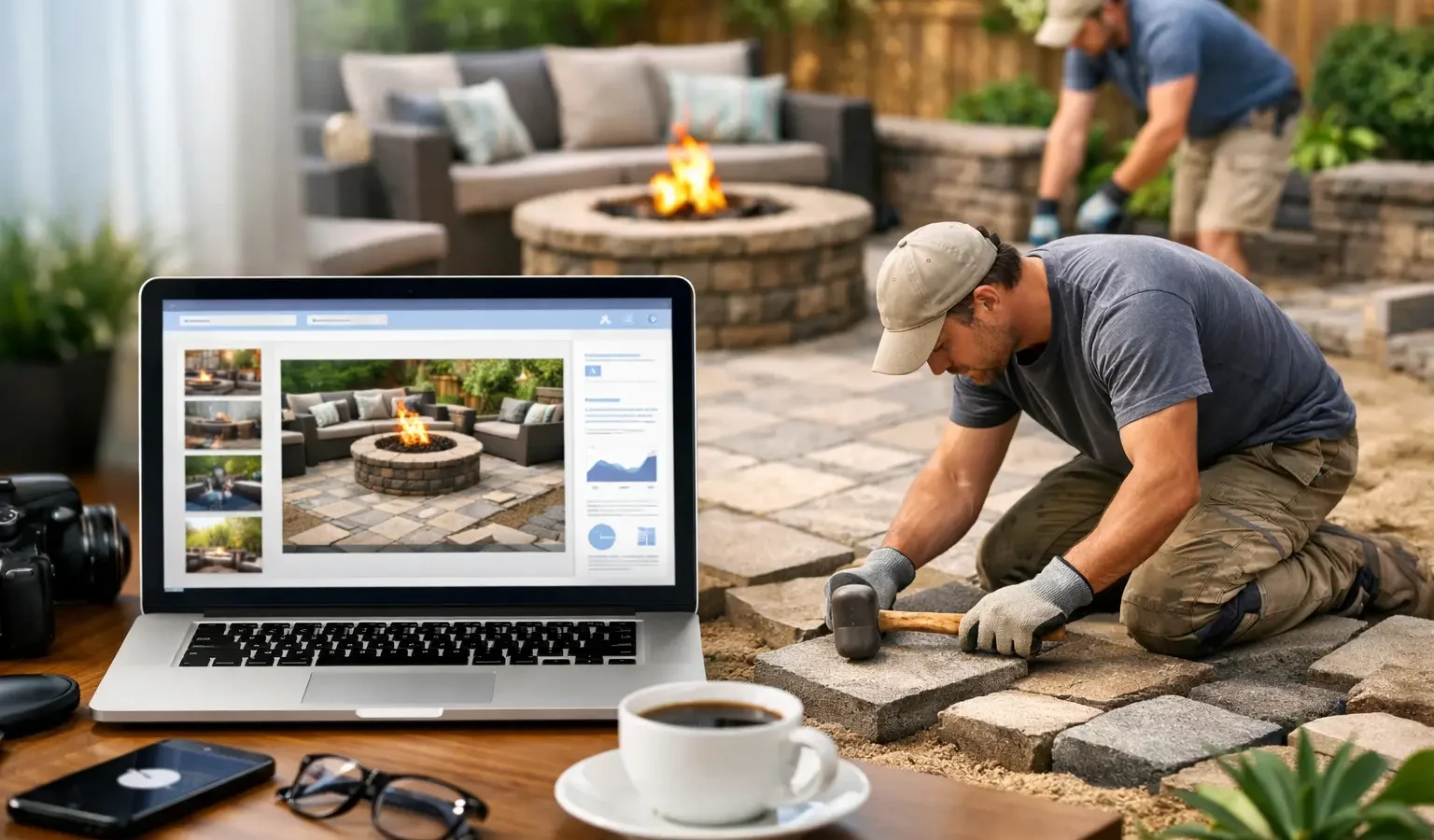
A homeowner scrolling Facebook is not looking for a contractor directory. They are looking at a backyard they may finally be ready to change. Facebook ads for patio contractors work when they turn that early interest into a serious conversation without putting your sales team through 30 low-budget inquiries to find one viable project.
That distinction matters. A premium paver patio, covered patio, outdoor kitchen, or full backyard build is a considered purchase. The homeowner may be gathering ideas for months, comparing materials, discussing financing, and waiting for the right season. Your campaign needs to create demand, identify fit, and move qualified prospects toward a consultation. It does not need to chase cheap form fills.
Why Facebook Ads for Patio Contractors Need a Different Funnel
Most generic contractor campaigns are built around volume. The ads promise a free estimate, point people to a short form, and count every submission as a lead. That approach can produce a busy inbox. It can also produce homeowners outside your service area, projects below your minimum, incomplete contact details, and requests for repairs you do not offer.
A patio contractor selling high-value work has a different job. You need to protect sales capacity while creating a predictable flow of projects that fit your crew, market, and margin requirements. The useful question is not, “How many leads did the ads generate?” It is, “How many homeowners who can fund the type of project we build booked and attended a consultation?”
Facebook is well suited to the top and middle of that process. It can put strong visual work in front of homeowners in affluent service areas before they start searching contractors by name. But the platform cannot qualify a project for you. The campaign structure, landing page, and follow-up process do that work.
Start With the Job You Want to Sell
Before launching ads, define the work worth putting on your calendar. Be specific. “Patio projects” is too broad to guide a campaign. A contractor building natural-stone patios with drainage, lighting, retaining walls, and planting needs a different audience and price conversation than a company installing small concrete extensions.
Set a practical minimum project value and decide which scopes belong in the campaign. You may want new paver patios, covered patio structures, outdoor kitchens, fire features, and full backyard renovations. You may not want repairs, sealing, small walkways, or projects where the homeowner is supplying materials.
This decision shapes everything downstream. Your ads should show the caliber of work you want more of. Your landing page should state the service area and invite homeowners to describe their project. Your qualification process should confirm budget, timing, scope, and property details before a consultation is booked.
There is a trade-off here. Stronger price signals and more qualification questions will lower raw lead volume. That is usually a win for an established builder. If your sales team is overloaded with poor-fit inquiries, fewer but better prospects are more valuable than a report full of names.
Build Ads Around Proof, Not Generic Promises
A clean patio photo is not enough. Plenty of contractors run attractive project images with the same broad claim: “Transform your backyard.” Homeowners have seen it all before.
Use your portfolio to make the project feel real and local. Show the full result in context: the patio surface, elevation changes, outdoor kitchen, roof structure, furniture zone, lighting, landscaping, and the home itself. Feature completed projects that resemble the work you want to build next, not simply the most photogenic job in your archive.
The copy should explain what the homeowner is considering. A useful ad might speak to a family planning a backyard renovation before the next entertaining season, then show the type of integrated patio project your team designs and builds. It can name the market or service area, set expectations around custom work, and invite a project consultation.
Avoid false urgency and vague claims about being the “best.” A homeowner preparing to spend $50,000, $100,000, or more on a backyard can tell when an ad sounds like a coupon. They need confidence in your craftsmanship, process, and ability to manage a significant project.
Video can work well when it reveals useful detail, such as a walk-through of a finished project or a builder explaining why a patio layout works for that property. Still images can outperform video when the portfolio photography is exceptional. Test both, but do not sacrifice presentation quality to meet a content quota.
Target Service Areas With Discipline
Geographic targeting should follow how your company actually operates. Do not blanket an entire metro area because it looks large on a map. Focus spend on the communities, ZIP codes, and travel radius where your team can build profitably and where the housing stock supports your price point.
Audience targeting on Facebook is less exact than many contractors expect. Interests can provide a starting point, but they are not a substitute for strong geography, persuasive creative, and qualification. The platform will learn from outcomes over time, especially when you consistently feed it good conversion signals.
That means exclusions matter too. Remove markets you will not serve. If a project is beyond your travel range or outside your licensing footprint, do not let ad spend create a problem your office must clean up.
Make the Landing Page Do Its Share of the Work
Sending traffic to your homepage is usually a mistake. Your homepage has to serve every visitor, from someone checking your phone number to someone researching a full outdoor renovation. An ad campaign needs a page built for one decision: whether this homeowner should request a project consultation.
Show relevant project photography and clearly explain the types of patio work you take on. State the service area. Give the homeowner enough confidence to continue, then ask for the information your sales team needs to assess fit.
A serious intake form can request the property address, project type, estimated budget range, desired timing, and a short project description. It should also collect reliable contact information. If your team commonly encounters access limitations, HOA requirements, drainage issues, or sloped yards, ask questions that surface those details early.
Longer forms are not automatically better. Every added question creates friction. The right amount depends on your lead volume, minimum project size, and internal capacity. If the office can call every inquiry quickly, a shorter form followed by a structured phone qualification may be appropriate. If sales appointments are scarce and expensive, it is sensible to qualify more before a calendar slot is offered.
Facebook lead forms can reduce friction because homeowners stay inside the platform. They can also generate more incomplete or casual submissions. Landing pages generally create more intent and give you greater control over the sales message. Many premium contractors benefit from testing both, then judging them by booked and held appointments rather than cost per lead alone.
Follow Up Fast, Then Qualify Like a Builder
The campaign is only half the system. A qualified homeowner who waits until tomorrow for a response may book with the contractor who called today. A consistent response process is not an administrative detail. It is part of the conversion rate.
Contact new inquiries promptly, confirm the basics, and ask the questions that protect your sales calendar. Is the property within your service area? What are they hoping to build? Have they discussed a realistic investment range? When do they want construction to begin? Is the decision-maker involved in the conversation?
This is not about interrogating people. It is about making the consultation useful for both sides. A homeowner with a vague vision may still be a strong prospect if the budget and property support the work. Someone requesting a $7,000 patio when your typical projects begin at $35,000 is not a bad lead. They are simply not the homeowner you actually want walking your jobsite.
Once a prospect meets your criteria, schedule directly onto the appropriate calendar. Confirm the appointment, send any preparation details, and keep the handoff clean. The estimator should arrive knowing the project type, budget range, timing, and property context, not starting from zero at the driveway.
Measure What Happens After the Form Fill
Cost per lead is useful, but it is an early indicator, not the finish line. A $40 lead that never answers the phone is more expensive than a $140 lead that becomes a $90,000 project.
Track the numbers that reflect your actual sales operation: ad spend, inquiries, completed qualification conversations, qualified prospects, booked consultations, held consultations, proposals, and closed revenue. Review them by campaign, creative, geography, and project category when the data volume allows.
This reporting shows where the system is breaking. If ads produce clicks but few form submissions, the offer or landing page may be weak. If submissions are high but qualifications are poor, your targeting, price signaling, or form questions may need adjustment. If qualified homeowners book but do not show, appointment reminders and confirmation processes deserve attention.
Deckari approaches paid social this way because the real output is not an attractive dashboard. It is a calendar populated with homeowners whose projects deserve your team’s time.
The best patio campaign should feel less like advertising volume and more like a disciplined intake system. Show work you are proud to build, set clear expectations, respond quickly, and keep improving based on booked consultations and closed jobs. That is how Facebook becomes a source of profitable backyard projects instead of another tab full of leads to chase.