How to Find a Covered Porch Builder Near Me
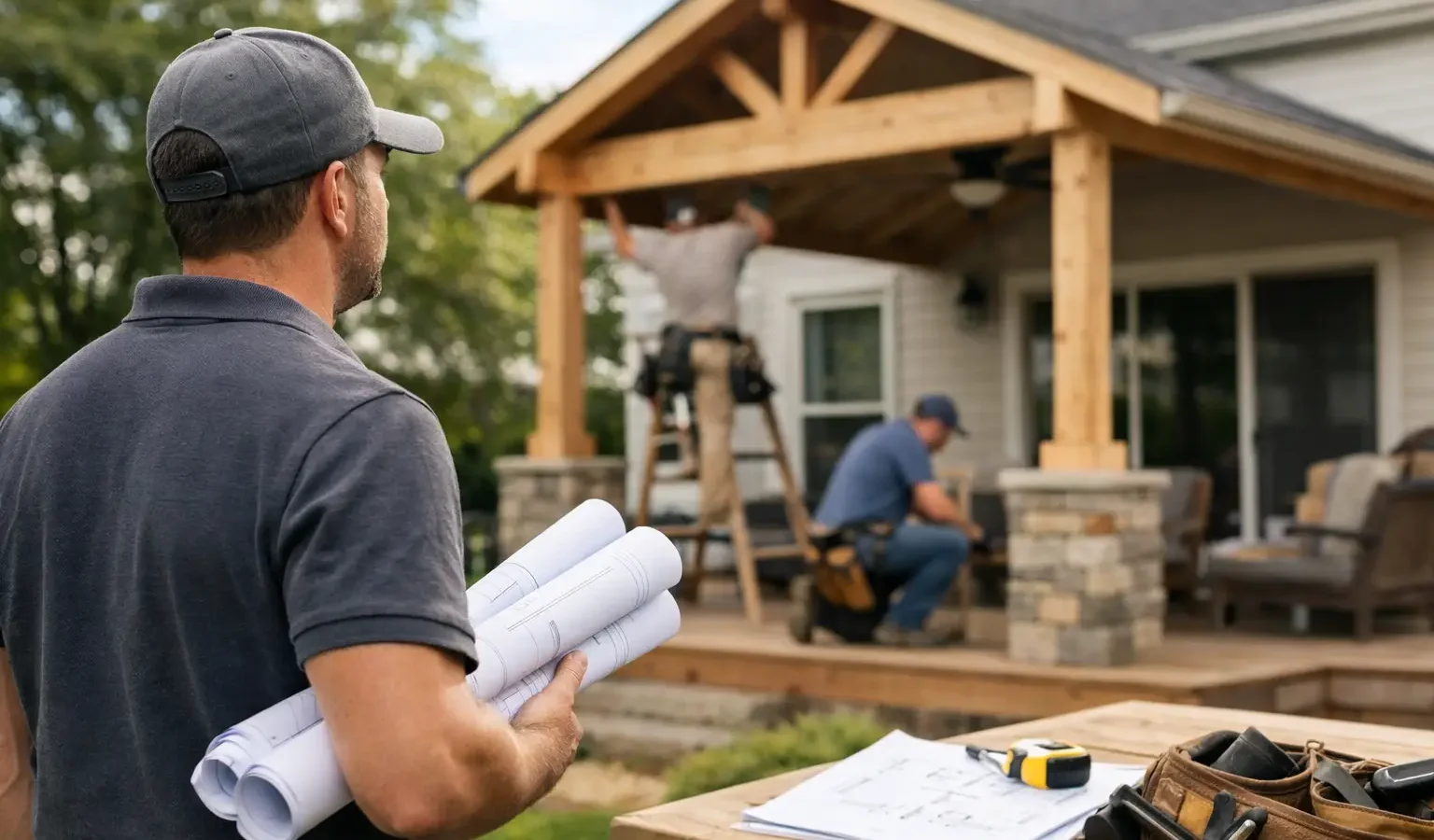
A search for a covered porch builder near me usually starts with a simple idea: a dry place for morning coffee, better shelter at the back door, or an outdoor room that can handle more of the year. The project becomes more specific quickly. Will the roof tie into the home? Does the existing deck need reinforcement? Should the porch be open, screened, or designed to become a larger backyard gathering area later?
The right builder helps answer those questions before a price is attached to the wrong scope. A covered porch is not simply a roof added to an outdoor surface. It affects structure, drainage, electrical planning, architectural details, permits, and how naturally the addition belongs with the house.
Start With the Porch You Actually Want
Before comparing builders, define the experience you want from the space. A compact covered entry porch and a deep, furnished rear porch may both be called covered porches, but they require different planning, budgets, and construction expertise.
Think through how you expect to use it. A dining porch needs room to move around chairs, serve food, and manage traffic from the kitchen. A lounging porch may need a fireplace wall, ceiling fans, layered lighting, or privacy from neighboring homes. If you want the option to add screens, shades, heaters, or an outdoor kitchen later, mention that early. Planning for future use can change footing locations, roof layout, electrical capacity, and material choices.
It also helps to identify what the porch must connect to. Some projects extend from an existing deck. Others begin at a patio, a walkout basement, or a rear elevation with limited roof clearance. A capable builder will look beyond the footprint and ask how water moves across the property, where stairs should land, and whether the porch creates a natural transition to the rest of the yard.
What to Look for in a Covered Porch Builder Near Me
Local proximity matters, but it should not be the deciding factor. A builder who is ten minutes away but primarily installs small open decks may not be the best fit for a roof-integrated porch with custom columns, lighting, and finished ceilings. Look for relevant project experience, not just a broad list of services.
Ask to see completed work that resembles your goals. Pay attention to roof connections, trim proportions, ceiling finishes, railing details, and transitions where the new structure meets the home. These are the details that often separate a porch that feels original to the house from one that looks added on.
You also want a builder who understands local conditions. In snow-country markets, roof loads and drainage deserve close attention. In coastal regions, moisture, wind exposure, and corrosion-resistant materials can shape the specification. In hot, sunny climates, roof orientation, fan placement, and shade depth have a direct effect on comfort. Local permitting requirements vary as well, especially when a project changes rooflines, setbacks, or structural loads.
A useful first conversation should cover more than square footage. The builder should ask about your property, whether you own the home, your target investment range, desired timeline, and how far along you are with design decisions. Those questions are not obstacles. They help determine whether the builder is equipped for the project you have in mind.
Know the Scope Before You Compare Estimates
Two covered porch estimates can differ substantially because they may describe different projects. One proposal might include basic framing, roofing, and a simple concrete slab. Another may include new footings, a finished tongue-and-groove ceiling, recessed lighting, masonry, drainage work, upgraded decking, screens, and permit coordination.
That is why the lowest number is rarely enough information. Request a clear written scope that identifies what is included and what remains undecided. If architectural drawings or engineering are needed, confirm who will arrange them and whether those costs are part of the proposal. If the existing deck, foundation, or siding needs modification, ask how that work is accounted for.
Material selections deserve the same clarity. A stained wood ceiling, composite decking, low-maintenance columns, metal roofing, and custom screen panels each affect cost and lead time. There is no single best combination. The right choices depend on your home’s architecture, maintenance preferences, climate, and how often the space will be used.
For a substantial outdoor project, a realistic budget range is more useful than trying to obtain an exact figure before the scope is settled. Sharing that range allows a builder to recommend an approach that fits rather than designing a porch that has to be scaled back late in the process.
Ask Questions That Reveal Fit
A strong builder should be comfortable discussing how the work will be planned and managed. During early calls or site visits, ask who will be your day-to-day contact, how change requests are handled, and what may affect the schedule after construction begins.
It is also reasonable to ask about permit experience, insurance, licensing requirements in your area, and how the crew protects landscaping and access to the home. For a porch attached to the house, ask how flashing, siding transitions, and drainage will be addressed. Those details may not be as visually exciting as a vaulted ceiling or fireplace, but they protect the investment behind the finished surface.
If you are considering an open porch versus a screened room, ask the builder to explain the trade-offs. An open porch offers an easy connection to the yard and fewer enclosure costs. A screened porch can reduce insects and windblown debris, but it introduces decisions about screening systems, doors, airflow, and seasonal use. A three-season room or sunroom may offer even more protection, while typically requiring a different level of glazing, insulation, and budget.
The best answer is often not a standard package. It depends on how you live outdoors and what the site allows.
Prepare for a More Productive First Meeting
You do not need finished plans before speaking with a builder. A few organized details can make the conversation more efficient and help you receive more relevant guidance.
Bring photos of the existing area, inspiration images that show the style you prefer, rough measurements, and any property survey or prior plans you have available. Be ready to explain what is not working now. Perhaps the back door opens onto an undersized landing, the existing deck is exposed to harsh afternoon sun, or the family needs a better place to host without bringing everyone inside.
Share your timeline honestly. If the porch must be ready for a graduation party or holiday gathering, say so, but recognize that design, approvals, material lead times, and weather can influence the construction calendar. A builder who is clear about those constraints is giving you useful information, not making the process harder.
This is also the point to state your decision-making process. If multiple household members need to review designs and estimates, let the builder know. If you are still deciding between a porch and a broader backyard renovation, ask whether the first phase can be planned to support later additions.
Use a Project-Specific Matching Process
Generic contractor searches can create a lot of repetitive conversations with professionals who may not take on your type of project. A more structured approach starts by describing the porch, property, budget range, timing, and level of design readiness so the initial introduction has context.
That is the role Deckari is built to support. It collects the details that help route homeowners toward outdoor living builders suited to the relevant project type and scale. The builder and homeowner then discuss design, estimates, agreements, and construction directly. You remain free to choose the contractor and the direction of the project.
A covered porch should make your home feel more usable long after the construction crew has left. Give the first conversation enough detail to test for real fit, then choose the builder whose work, communication, and approach give you confidence to move forward.