Cedar Versus Composite Decking for Your Home
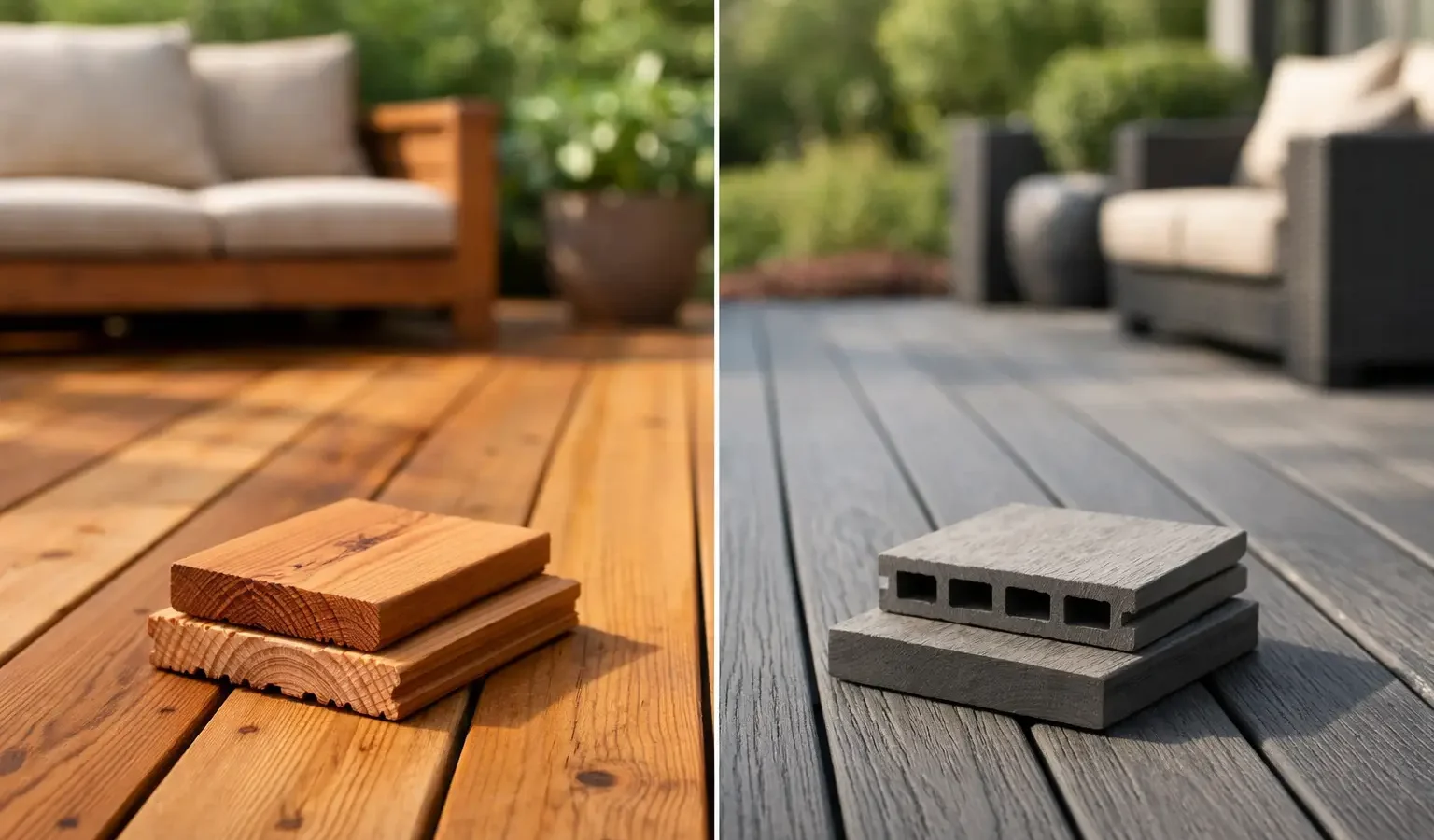
A deck material decision changes more than the color underfoot. It affects how often you maintain the space, how it feels in direct sun, how it works with your home’s architecture, and what you may spend over the years ahead. When comparing cedar versus composite decking, the better choice is rarely universal. It depends on whether you value natural character, low-maintenance ownership, budget flexibility, and the conditions around your property.
For a replacement deck, a new entertaining area, or a larger backyard transformation, this is a useful decision to make early. The decking material can influence railing choices, stair details, lighting, framing needs, and the overall budget a builder will discuss with you.
1. Start With the Experience You Want
Cedar and composite create distinctly different outdoor environments. Cedar is real wood, with grain variation, knots, and a warm appearance that many homeowners prefer for cabins, traditional homes, garden settings, and landscapes where natural materials matter. It can be stained to complement exterior trim or allowed to weather toward a soft gray if that fits the design.
Composite boards are manufactured from a blend of recycled wood fibers and plastic, typically protected by a durable outer cap. They offer more consistent color and board-to-board appearance. For homeowners planning a clean-lined contemporary deck, a poolside gathering space, or a large multi-level structure, that consistency can be appealing.
Neither option is automatically more attractive. A cedar deck may feel more integrated with a wooded, lakeside, or mountain property. Composite may better suit a low-maintenance suburban backyard, a coastal setting, or a home with a modern exterior palette. Bring photos of the house, landscape, and materials you are drawn to into your first builder conversation. They provide more direction than a color sample alone.
2. Compare Upfront Cost With Long-Term Ownership
Cedar commonly has a lower initial material cost than premium composite decking, although local lumber pricing, deck size, board grade, and installation complexity can change the gap. It can be an appealing path when you want the look of natural wood and have room in your plan for periodic care.
Composite often costs more at installation. The total can increase further when you select premium lines, hidden fasteners, picture-frame borders, matching fascia, and coordinating rail systems. That higher starting investment may make sense for homeowners who expect to keep the deck for many years and want to minimize refinishing work.
The more useful comparison is not simply material price per square foot. Consider the full ownership picture: cleaning products, stain or sealer, labor if you hire out maintenance, potential board replacement, and the time you want to spend caring for the deck. A cedar deck can remain a beautiful long-term feature, but it asks for more attention. Composite usually asks for less routine maintenance, but it is not maintenance-free.
A builder can help translate material pricing into a realistic project budget, including the items that are easy to overlook, such as demolition, framing repairs, permits, footings, drainage improvements, stairs, railings, and electrical work for lighting or an outdoor kitchen.
3. Understand the Maintenance Commitment
Cedar needs regular cleaning and protection from moisture and ultraviolet exposure. Depending on climate, sun exposure, finish type, and the look you want to preserve, that may mean cleaning and applying a stain or water-repellent finish every one to three years. Horizontal surfaces near trees, sprinklers, shade, or water can require particular attention.
Without regular finishing, cedar can fade, dry out, develop surface checking, or take on uneven weathering. Some homeowners welcome the aged silver-gray look, but even a weathered wood deck benefits from inspection and cleaning. The work is manageable for a hands-on homeowner, though it should be an honest part of the decision.
Composite generally needs washing with soap, water, and a soft brush to remove pollen, dirt, food residue, and mildew. The cap helps resist staining and fading, particularly on quality products, but it does not prevent every issue. Leaves, grill grease, sunscreen, and standing water should still be cleaned promptly. Follow the manufacturer’s approved cleaning guidance rather than using harsh chemicals or aggressive pressure washing.
If weekend maintenance is likely to become a source of frustration rather than satisfaction, composite deserves serious consideration. If you enjoy maintaining natural materials and appreciate the ability to refresh the deck’s color over time, cedar can be a rewarding choice.
4. Factor in Sun, Moisture, and Regional Conditions
Material performance is closely tied to the site. A south-facing deck in Southern California, Georgia, or Colorado may receive intense sun. Dark composite colors can become noticeably warm under bare feet, although product lines vary in heat retention. Cedar can also heat up in full sun, but many homeowners find it more comfortable than darker composite boards. Request full-size samples and place them outside at the time of day you use the deck most.
In the Pacific Northwest, the Adirondacks, lakeside communities, and shaded backyards across the Midwest, moisture management becomes central. Cedar naturally resists decay better than many wood species, but it is still wood. Proper board spacing, airflow below the deck, drainage, and timely sealing all matter.
Composite resists rot and insect damage more effectively than cedar, making it practical for damp locations. Still, the framing beneath a composite deck is often wood and requires proper flashing, drainage, fasteners, and inspection access. Choosing composite boards does not correct a poorly designed or poorly ventilated deck structure.
For wildfire-prone regions, code requirements and community standards may narrow the available choices. Do not assume that a material’s marketing label answers the question. Ask your builder which products meet applicable local requirements and whether the full deck assembly, including framing and railings, affects the approval process.
5. Look Beyond the Deck Boards
A well-planned deck is a system, not a field of boards. Cedar can be paired with wood railings, painted trim, cable rail, or metal accents. It gives a builder flexibility to create custom details, but those details should be designed with water shedding and ongoing maintenance in mind.
Composite works especially well with concealed fastening systems and coordinated trim components for a polished finish. It may also support a more predictable visual result across a large deck expansion or a backyard project with several zones. However, composite boards expand and contract differently than wood, so installation specifications are not optional. Proper gapping, fastening, and board orientation protect both appearance and performance.
This is also where project scope matters. A simple platform replacement may make the material choice straightforward. A deck connected to a screened room, pergola, retaining wall, fire feature, or outdoor kitchen involves more trades and more design decisions. The right contractor should understand the whole plan, not only the surface material.
6. Make the Cedar Versus Composite Decking Choice Clearer
Choose cedar when natural grain, authentic wood character, and a lower initial material cost are priorities, and you are comfortable with ongoing care. It is often a strong fit for homeowners who want a deck that evolves naturally with the property and are willing to maintain its finish.
Choose composite when you want predictable color, strong moisture resistance, and less recurring maintenance. It is often the better fit for busy households, larger decks, exposed sites, and homeowners who would rather spend their weekends using the space than refinishing it.
There is also a middle ground. Some homeowners use composite for the primary deck surface while incorporating cedar privacy screens, pergola elements, or benches where the warmth of real wood can stand out. This approach can balance maintenance concerns with the desire for natural material.
Before requesting estimates, define what matters most: your target investment range, how long you expect to own the home, maintenance tolerance, preferred appearance, sun exposure, and the features you want around the deck. A clearer project brief leads to a more useful first conversation with a qualified builder. Deckari can help organize those details so you can be introduced to professionals equipped for the scope you have in mind.
The best deck material is the one that supports the way you plan to live outside. Give your builder the full picture of the site and the life you want the space to hold, then make a choice you will still feel good about after the first season has passed.